Services
Repair. Restore. Replace.
Decided by data.
Most commercial roofing decisions come down to one question: what does the assembly actually need? We answer it the same way every time: condition assessment, documentation, recommendation. Then we execute. Replacement is not the default. Preservation is responsible when the data supports it.
Service Categories
Built around what you actually need.
Most building owners and property managers don’t think in roofing system language at first. They think in problem language. We meet you where you are, then bring system-level expertise as the conversation deepens.
Starting Point
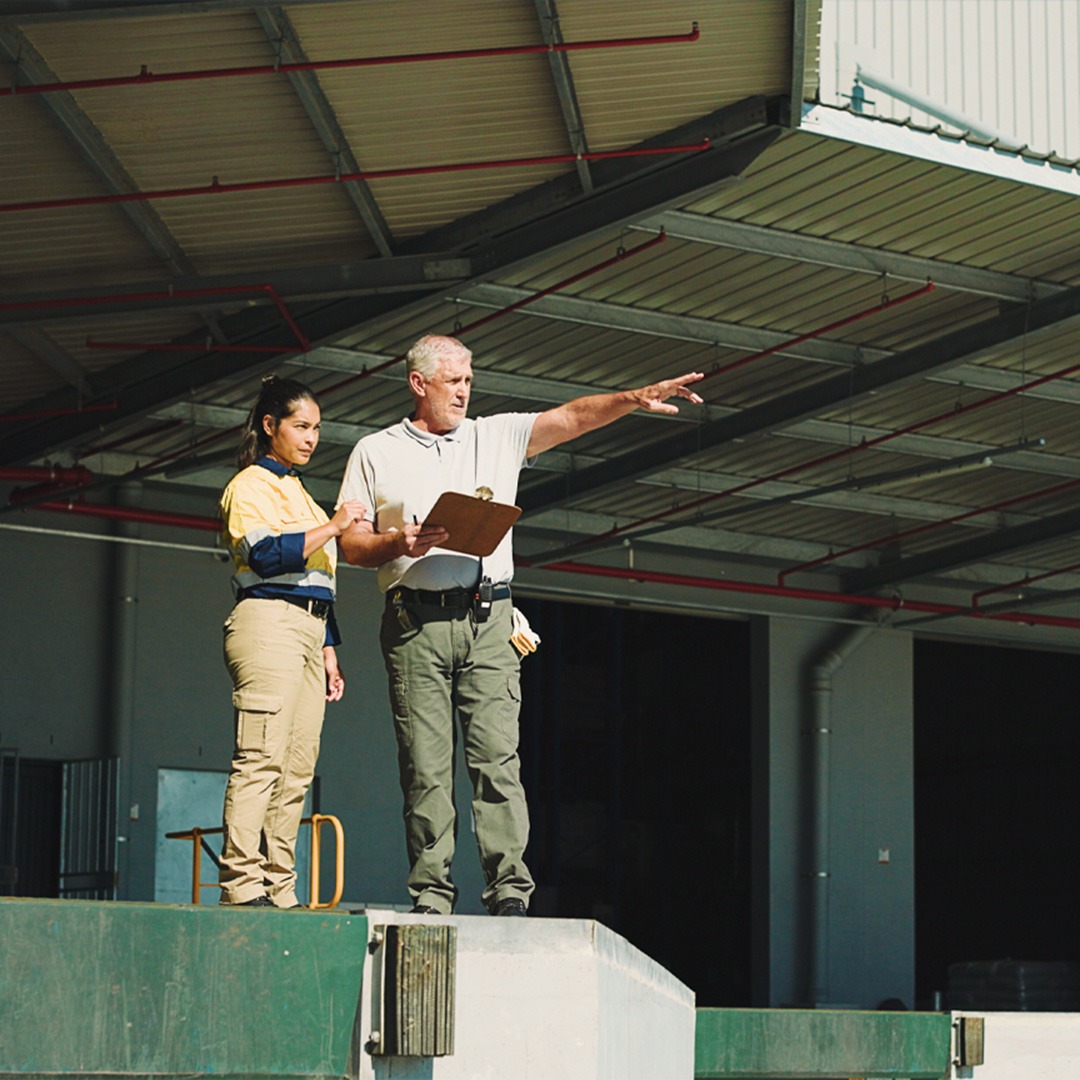
Roof Health Assessment
Documented condition evaluation. Photographic record of every penetration, drain, flashing, seam, and field area. Moisture analysis where conditions warrant. Core sampling on assemblies where substrate condition can’t be determined visually.
The output is a written report that gives you a defensible basis for whatever decision comes next, whether that’s continuing to monitor, scheduling targeted repair work, planning restoration, or budgeting for replacement. Yours regardless of whether you engage us further.
Request a Roof Health Assessment →
Preservation
Repair
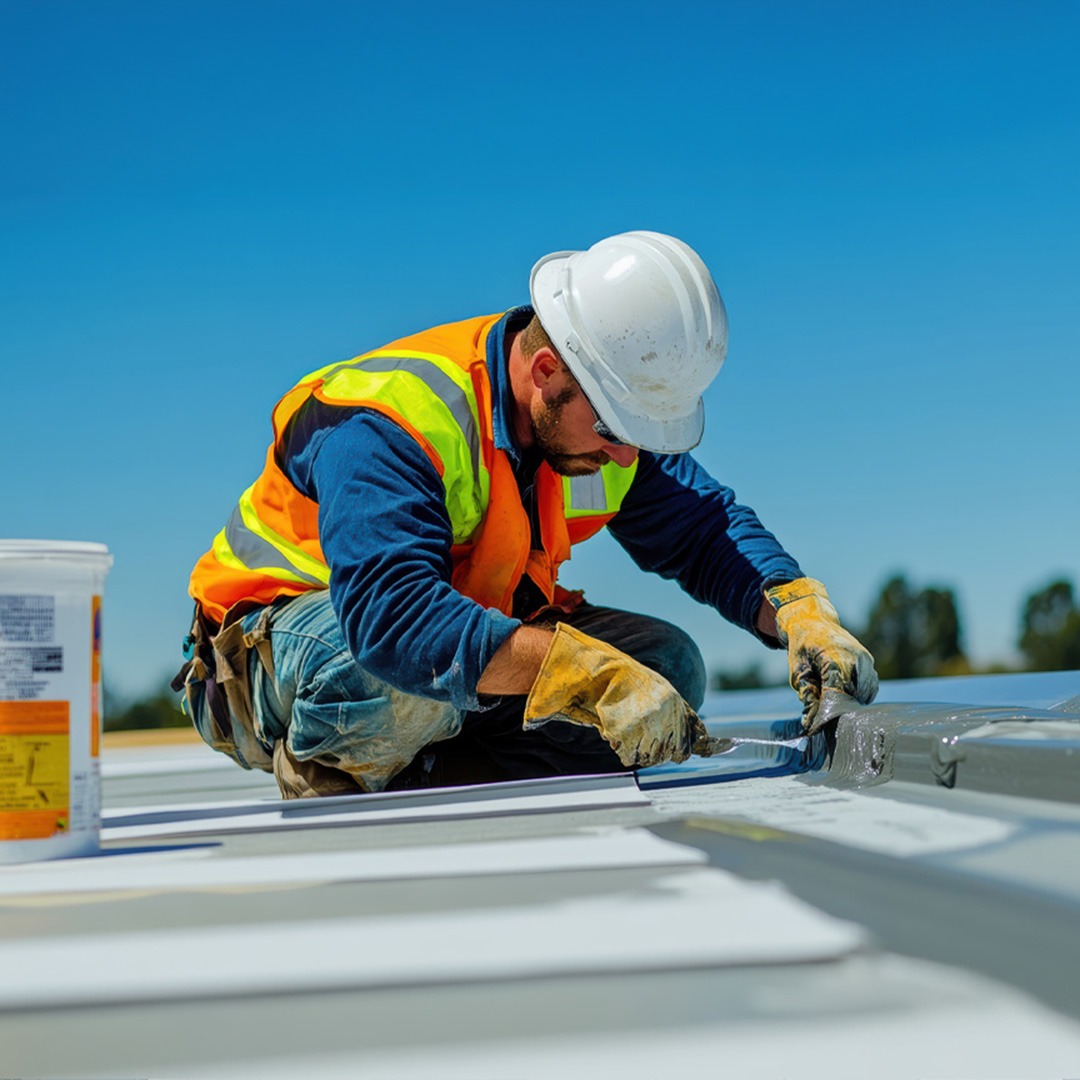
Not every leak means a new roof. Targeted repairs at flashings, seams, penetrations, and drains can add years to your existing assembly, and protect your manufacturer warranty. We diagnose the real failure point and fix only what’s failing, with documentation your insurer and warranty desk will accept.
Repair work is often where a relationship begins. A small repair done right is how a roof’s owner first learns whether a contractor is worth a call back when the bigger project comes around. We treat repair work the same way we treat replacement work: documented, accountable, no shortcuts.
Lifecycle Extension
Restoration
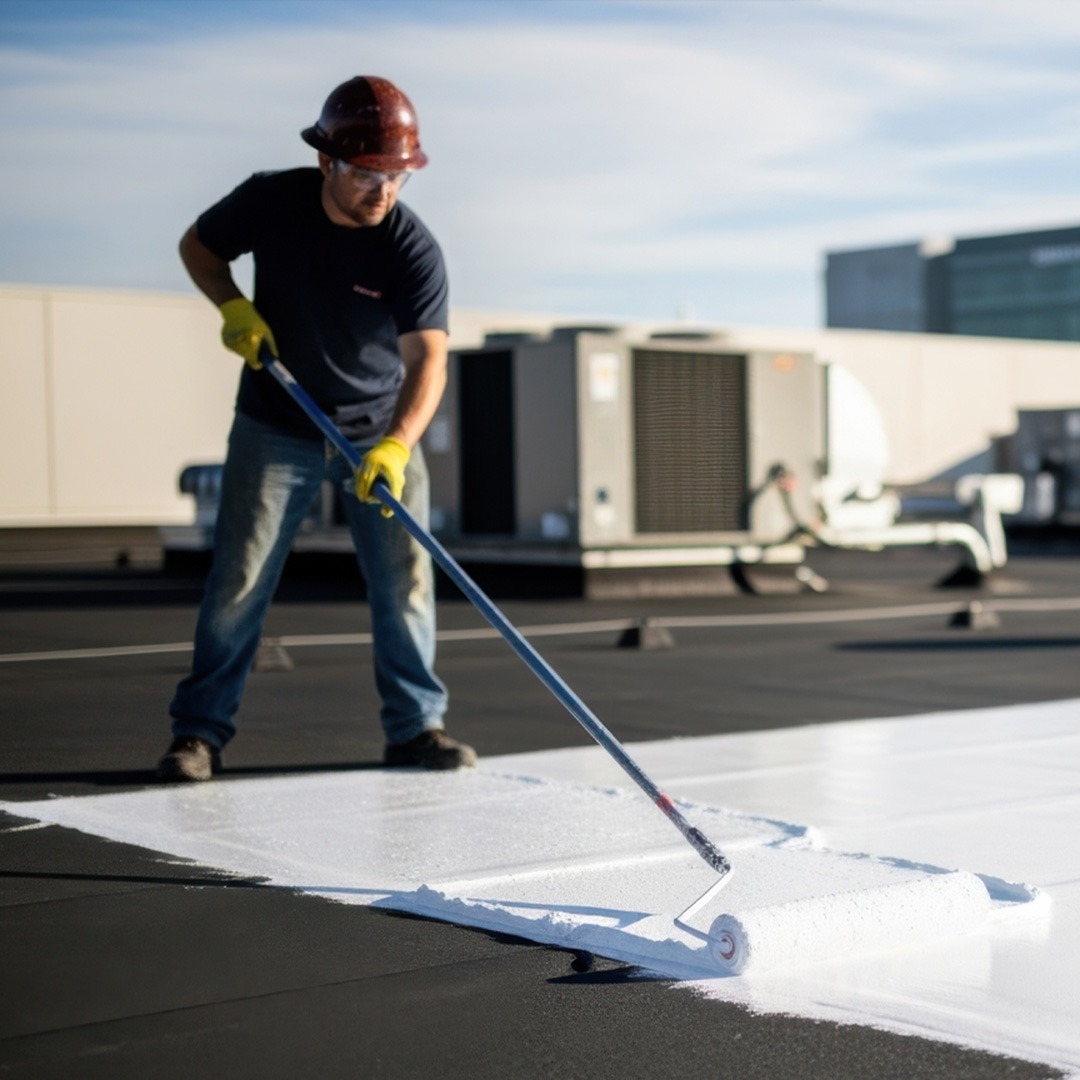
Replacement isn’t your only option. If your roof’s foundation is still sound but the top layer is breaking down, restoration can add 10–15 years of service life for a fraction of the cost of tearing it off. We apply protective coatings, reinforce weak seams, and upgrade insulation where it counts, with full documentation and warranty coverage.
We document why restoration is the right call before we propose it, including a moisture survey where conditions warrant. Replacement is not the default recommendation, and serviceable assemblies are repaired where viable.
Capital Project
Replacement
When moisture is in the system, the assembly has reached end of service life, or structural compromise rules out repair and restoration, we replace. Documented evaluation precedes every replacement recommendation, because the wrong call costs the owner more than the right one.
Systems we install: TPO, PVC, KEE, EPDM, modified bitumen, BUR, and metal. Warranty registration confirmed in writing on every project.
No Obligation
Second Opinions
Got a bid that doesn’t sit right? A scope that seems too aggressive, or too thin? We’ll review the proposal, walk the roof, and tell you what we’d actually recommend, and why. If we agree with the original bid, we’ll tell you that too.
Request a Second Opinion →
Service Categories
System-level expertise across the commercial assembly suite.
Low-slope and steep-slope systems, selected based on building condition, performance objectives, and budget. Not on what we’d rather sell.
TPO
- Single-ply, white, reflective
- The dominant single-ply membrane in commercial roofing.
- Heat-welded seams, lightweight, energy-performance forward. Common across retail, warehouse, and office portfolios.
Learn More →
PVC
- Single-ply, chemical-resistant
- Heat-welded single-ply for facilities with grease, chemical, or hydrocarbon exposure:
-
- Restaurants
- Manufacturing
- Food processing
-
Learn More →
KEE
- High-performance thermoplastic
- Ketone Ethylene Ester: a heat-welded thermoplastic that retains its plasticizers over time, resisting brittleness and surface cracking better than standard PVC.
- The right call for chemical-exposure environments and longer service-life expectations.
Learn More →
EPDM
- Rubber membrane, long-service
- The industry’s longest-tenured single-ply.
- Rubber membrane that performs in industrial, cold-climate, and temperature-cycle conditions.
Learn More →
Modified Bitumen
- Multi-layer redundancy
- Multi-ply asphaltic systems with built-in redundancy through layered installation.
- Excellent for high-traffic and impact-exposure roofs.
Learn More →
Metal
- Standing-seam & exposed-fastener
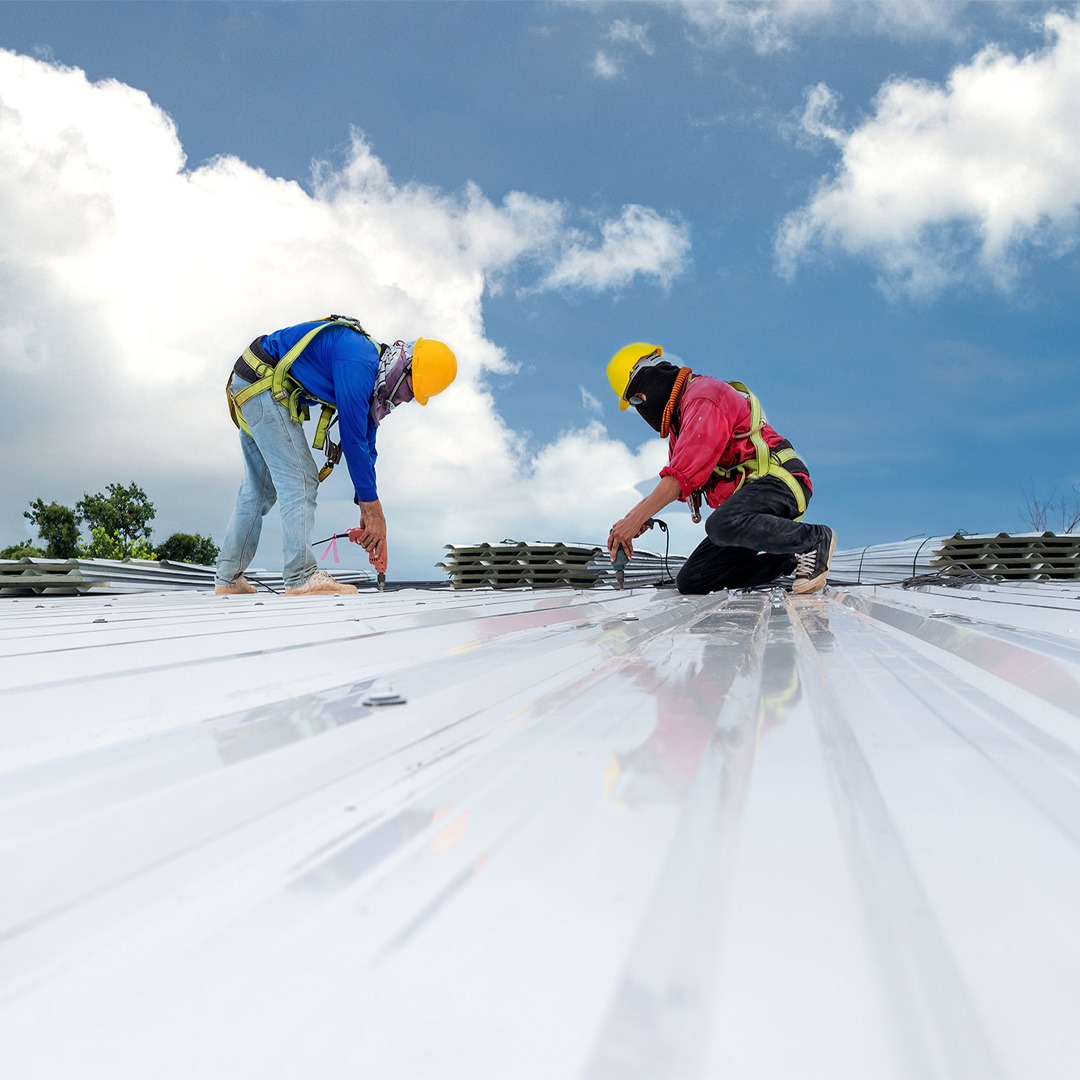
- Long-horizon performance for owners willing to invest in it.
- Standing-seam systems for low-slope; exposed-fastener for industrial and agricultural.
Learn More →
BUR
- Built-up, multi-ply asphalt
- The century-tested commercial flat-roof standard.
- Multi-ply asphalt and reinforcing fabric installed on-site for long-hold institutional buildings and demanding applications.
Learn More →
Specialty & Architectural
- Slate, tile, copper, premium shingle
- Architectural metal, shingles, tile, slate, copper, and the specialty materials that show up on hospitality, religious, historic, and architectural commercial work.
Learn More →
Comparison
Commercial roofing systems compared.
A side-by-side look at lifespan, cost, applications, and key benefits to help you find the right balance for your building.
| System | Typical Lifespan | Relative Cost | Best Applications | Key Benefits |
| TPO | 20–30 years | $$ | Retail, logistics, general commercial | Energy-efficient, reflective, versatile |
| PVC | 20–30 years | $$$ | Restaurants, healthcare, specialty facilities | Chemical resistance, strong seams, durable |
| EPDM | 25–30 years | $$ | Offices, warehouses, industrial buildings | Flexible, proven, weather resistant |
| Modified Bitumen | 15–25 years | $$ | Schools, municipal facilities, older buildings | Multi-layer protection, durable, serviceable |
| Metal | 30–40+ years | $$$$ | Commercial campuses, office properties, feature projects | Long life, durable, premium appearance |
| KEE | 25–35+ years | $$$$ | Restaurants, food processing, labs, chemical exposure | Excellent chemical resistance, long-term flexibility, strong heat-welded seams |
Industries Served
Built for the buildings that build the economy.
Commercial roofing across the full spectrum of property types. Each industry has its own performance demands, code requirements, and operational realities. We know them.

Retail & Restaurants
Shopping centers, big-box stores, strip retail, standalone restaurants, fast-casual chains, drive-thru concepts, and grocery.

Office & Class A Commercial
Corporate office, professional services parks, medical office buildings, multi-tenant complexes, and Class A real estate.

Warehouse, Distribution & Logistics
Distribution centers, fulfillment facilities, third-party logistics warehouses, regional hubs, and last-mile facilities.

Manufacturing & Industrial
Light and heavy manufacturing, fabrication, assembly plants, processing facilities, and industrial parks with chemical or oil exposure.

Food & Beverage Production
Food processing plants, beverage bottling, dairy and meat processing, packaging, breweries, distilleries, and commercial bakeries.

Cold Storage & Refrigerated Warehousing
Refrigerated and freezer warehouses, food cold chains, pharmaceutical cold storage, and temperature-controlled facilities.

Healthcare & Life Sciences
Medical office buildings, surgery centers, specialty clinics, urgent care, dialysis, imaging, biotech labs, and research facilities.

Education
K–12, charter schools, private schools, community colleges, university buildings, athletic facilities, and administrative buildings.

Government & Municipal
City and county buildings, courthouses, public works, libraries, public safety, fire and police stations, and municipal infrastructure.

Religious & Nonprofit
Churches, synagogues, mosques, faith-based community centers, nonprofit headquarters, and charitable facilities.

Multi-Family & Mixed-Use
Apartments, condominiums, senior living, student housing, mixed-use developments, and HOA-governed properties.

Hospitality
Hotels, motels, resorts, conference centers, event venues, and short-term rental properties.

Self-Storage
Climate-controlled and non-climate-controlled storage, mini-storage portfolios, and RV and boat storage facilities.

Automotive & Equipment Service
Dealerships, service centers, body shops, tire and lube facilities, equipment rental yards, and fleet service buildings.

Recreation & Entertainment
Gyms, fitness centers, recreation centers, athletic clubs, indoor sports facilities, theaters, and entertainment venues.

Agricultural & Rural Commercial
Equipment storage, agricultural processing, feed and supply facilities, and rural commercial buildings.

Real Estate Investment & Property Management
REIT-owned buildings, private equity real estate, family office portfolios, and third-party-managed commercial properties.

Don't See Your Industry?
We’ve got you covered. Schedule a consultation.
Not sure?
The right system depends on building condition, performance objectives, climate, and budget. We’ll walk it with you, model the comparison, and recommend based on data.
Whatever the need, we’ll respond.
From the smallest repair to a full portfolio replacement. From a second opinion on someone else’s bid to a multi-year capital plan. The right response, scaled to the situation.